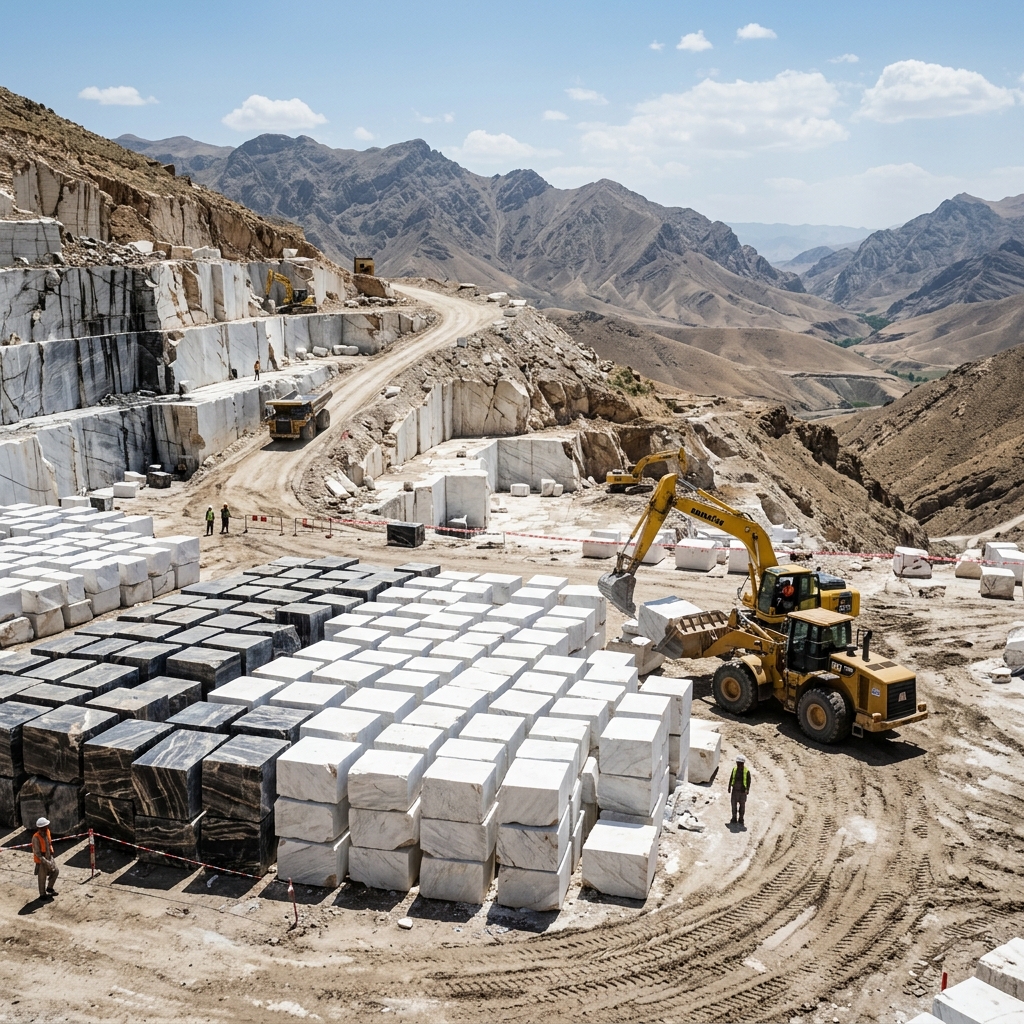
As international demand for Herat White, Afghan Onyx, and Chesht-i-Sharif marble rises, stone wholesalers, processors, and real estate developers are increasingly looking to import directly from Afghan quarry operations.
Importing natural stone requires a clear understanding of block inspection, transit corridors, sea freight container loading, and customs documentation.
1. Selecting Blocks vs Polished Slabs
- Gangsaw Slabs (Finished Slabs): Ideal for builders and architects needing ready-to-install 16mm/18mm/20mm polished slabs packed in heavy wooden A-frame crates.
- Rough Blocks (Raw Blocks): Preferred by stone processing factories in Kishangarh (India), UAE, or Italy equipped with gangsaw machinery to cut custom thickness slabs locally.
2. Essential Quality Inspection Protocols
Before any container is sealed for export, we conduct rigorous pre-shipment quality checks:
- Soundness & Fissure Test: Ultrasonic pulse testing to verify zero internal hairline fractures.
- Color Consistency: Sorting slabs by vein flow and shade matching to ensure uniform book-matching.
- Dimension Accuracy: Verifying squareness and uniform thickness across all slab edges.
3. Freight Routes & Customs Documentation
Afghan marble is transported overland from Herat/Kabul through established trade corridors to sea ports (such as Chabahar, Bandar Abbas, or Karachi) and shipped directly to ICD Kishangarh, Mundra, Jebel Ali, or European ports.
Required documentation includes: Certificate of Origin, Phytosanitary Certificate for wooden crating, Bill of Lading (B/L), Commercial Invoice, and Packing List.