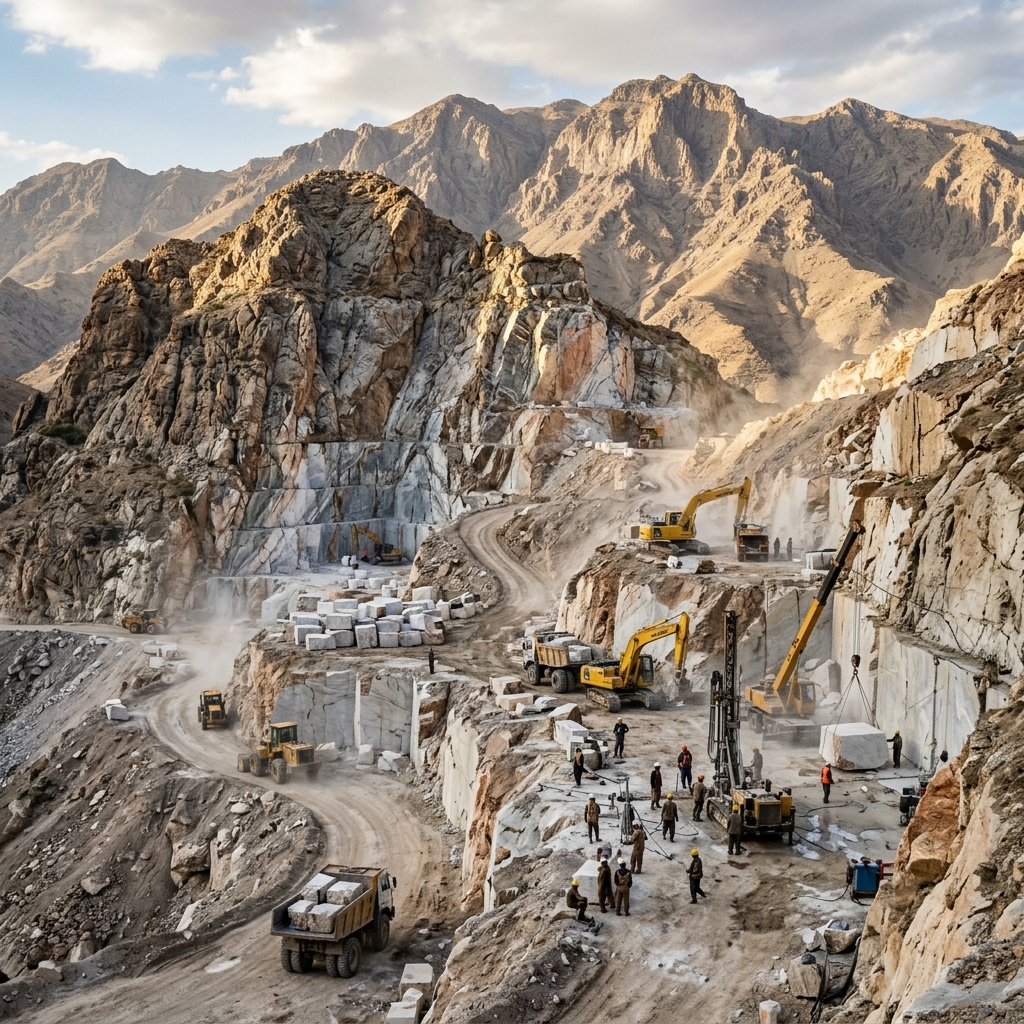
Afghanistan sits on one of the world's largest and most varied reserves of natural stone. The country's geological makeup — shaped by the collision of the Indian and Eurasian tectonic plates along the Hindu Kush mountain range — has produced extraordinary concentrations of marble, onyx, granite, limestone, and semi-precious gemstones across its provinces.
The Afghanistan marble industry represents one of the country's most significant non-poppy export sectors, generating hundreds of millions of dollars in annual trade to India, Pakistan, China, the UAE, and beyond. Yet despite its enormous geological wealth and growing international demand, the industry remains relatively underreported and underexplored by global stone buyers.
This article provides the most comprehensive overview available of the Afghanistan marble industry — its historical roots, geological wealth, quarrying provinces, export patterns, major trade partners, and the future of Afghan natural stone in global markets.
1. Historical Roots of Marble Quarrying in Afghanistan
The use of natural stone in Afghanistan dates back thousands of years. Archaeological evidence from the region shows that Afghan limestone and marble were used in construction and decorative work as far back as the Bronze Age (2000–1500 BCE).
However, the most historically significant period of Afghan stone quarrying began during the Timurid Dynasty (1370–1507 CE), when Herat served as the cultural capital of a vast Persian-influenced empire. Timurid architects used local Herat white marble extensively in the construction of magnificent mosques, mausoleums, and palace complexes — several of which still stand today.
- The Musalla Complex of Herat (1417 CE): Queen Gawhar Shad's monumental mosque and madrassa used Herat white stone extensively in flooring and decorative panel work.
- The Gazar Gah Shrine: An important Sufi shrine near Herat featuring local marble inlay work dating to the 15th century.
- The Blue Mosque of Mazar-i-Sharif: Ongoing use of Afghan marble in the maintenance and restoration of this iconic structure.
By the 20th century, industrial-scale marble quarrying had begun in Herat, Badakhshan, and Kandahar provinces, with early export routes established through Pakistan to India and the Persian Gulf states.
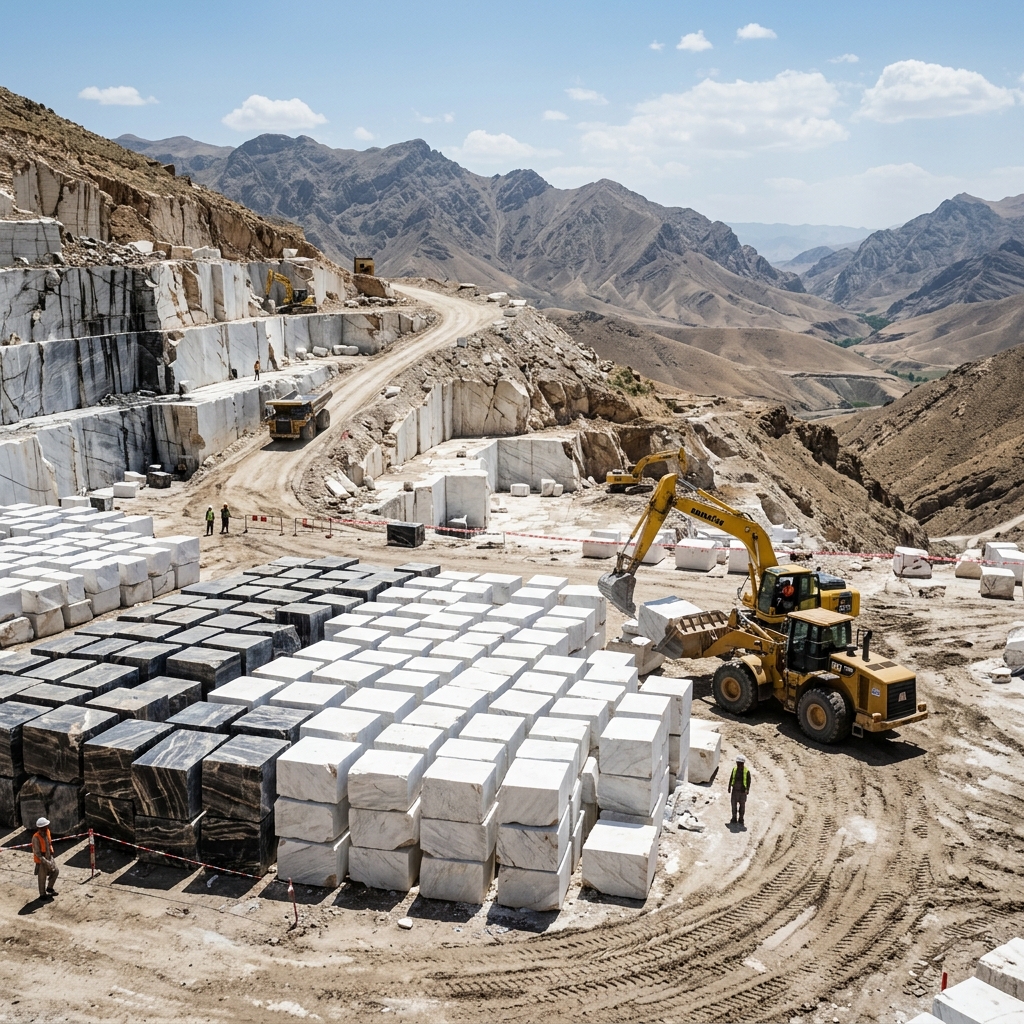
2. Afghanistan's Geological Wealth — Why the Country Has Such Extraordinary Stone
The geological conditions that formed Afghanistan's remarkable stone deposits are a direct consequence of the country's tectonic history:
Approximately 65 million years ago, the Indian subcontinent collided with the Eurasian plate — a collision that is still ongoing and continues to drive the uplift of the Himalayas and Hindu Kush mountain ranges. This immense tectonic force subjected the ancient seafloor limestone and carbonate rocks of the region to extraordinary heat and pressure — transforming them into the dense, crystalline metamorphic marbles found across Afghanistan today.
- Herat Province: The largest white calcite marble deposits — Herat White marble is Afghanistan's most exported stone
- Badakhshan Province: Rare lapis lazuli, grey marbles, and unique breccia stones
- Kandahar Province: Onyx deposits, green marbles, and serpentinite stone
- Helmand Province: Additional onyx quarrying and mixed color marble deposits
- Bamyan Province: Unique grey and cream limestone formations
- Ghazni Province: Black limestone and dark marble deposits
3. Major Afghanistan Marble Quarrying Provinces
Herat Province — Afghanistan's Marble Capital
Herat is unquestionably the most important province in the Afghanistan marble industry. The Herat basin contains the country's largest white marble reserves — estimated to cover over 2,400 square kilometers of marble-bearing geological formations. Active quarrying sites are concentrated in several districts:
- Pashtun Zarghun district: Primary source of premium Grade A Herat White marble
- Chesht-i-Sharif area: Historical quarrying site producing the distinctive grey-white Chesht marble
- Kohsan district: Secondary white marble deposits with slightly warmer cream undertones
Kandahar Province — Onyx Capital
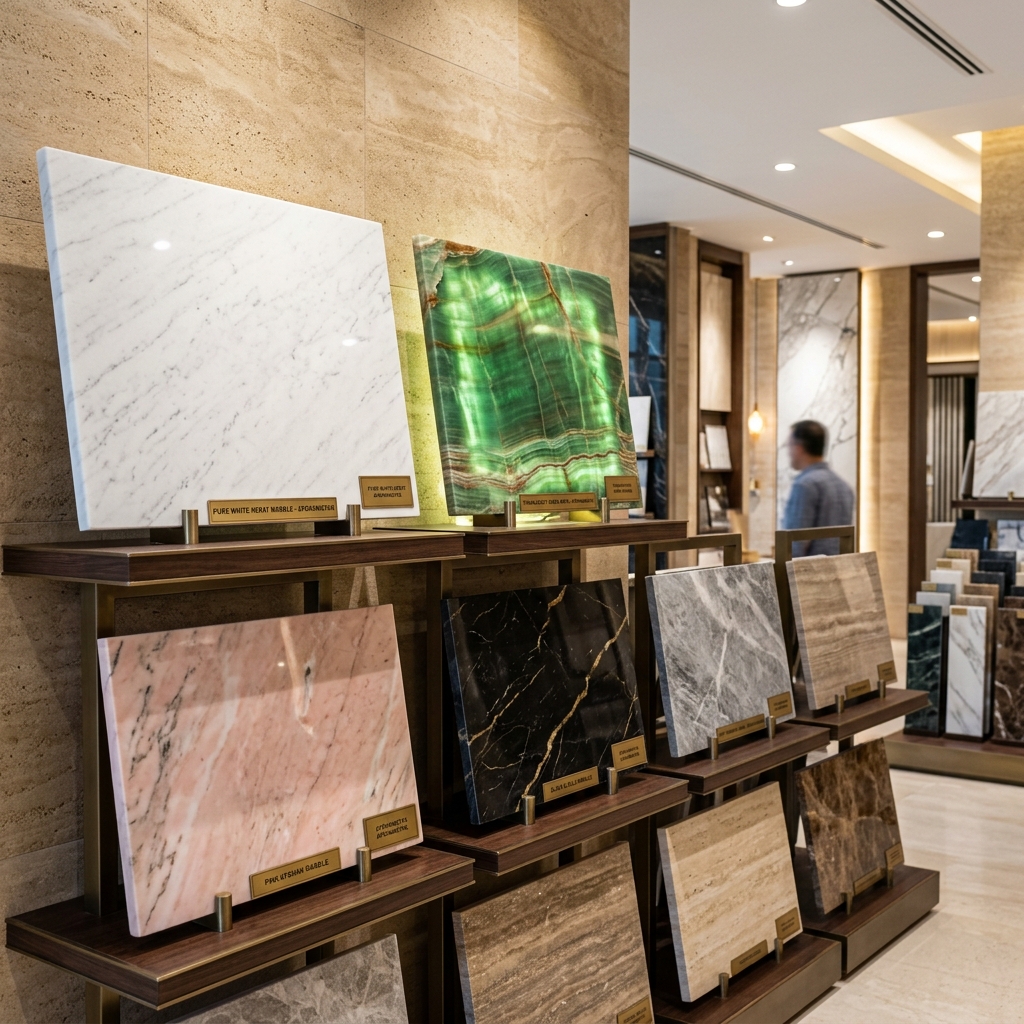
Kandahar is Afghanistan's primary source of the spectacular translucent onyx varieties. The province's calcite sinter formations — deposited by ancient hot spring and cave systems — produced the layered banded onyx deposits that yield the green, honey, white, and red onyx varieties prized in luxury interior design worldwide.
Badakhshan Province — Rare Stones
Beyond the famous lapis lazuli mines, Badakhshan also produces distinctive grey, green, and breccia marble varieties. The relative inaccessibility of Badakhshan quarries (due to mountainous terrain) has kept production volumes lower, making Badakhshan stones rarer and typically higher-priced than Herat varieties.
4. Scale of Afghanistan Marble Exports — Key Statistics
The Afghanistan marble industry, despite infrastructure and geopolitical challenges, has grown significantly as an export sector:
- Afghanistan's total mineral and stone exports have been valued at over $1.2 billion annually in recent peak years
- Marble and natural stone typically account for 15–25% of total Afghan mineral exports
- The primary export routes are via Pakistan (Karachi port) for sea freight to India, UAE, and international markets
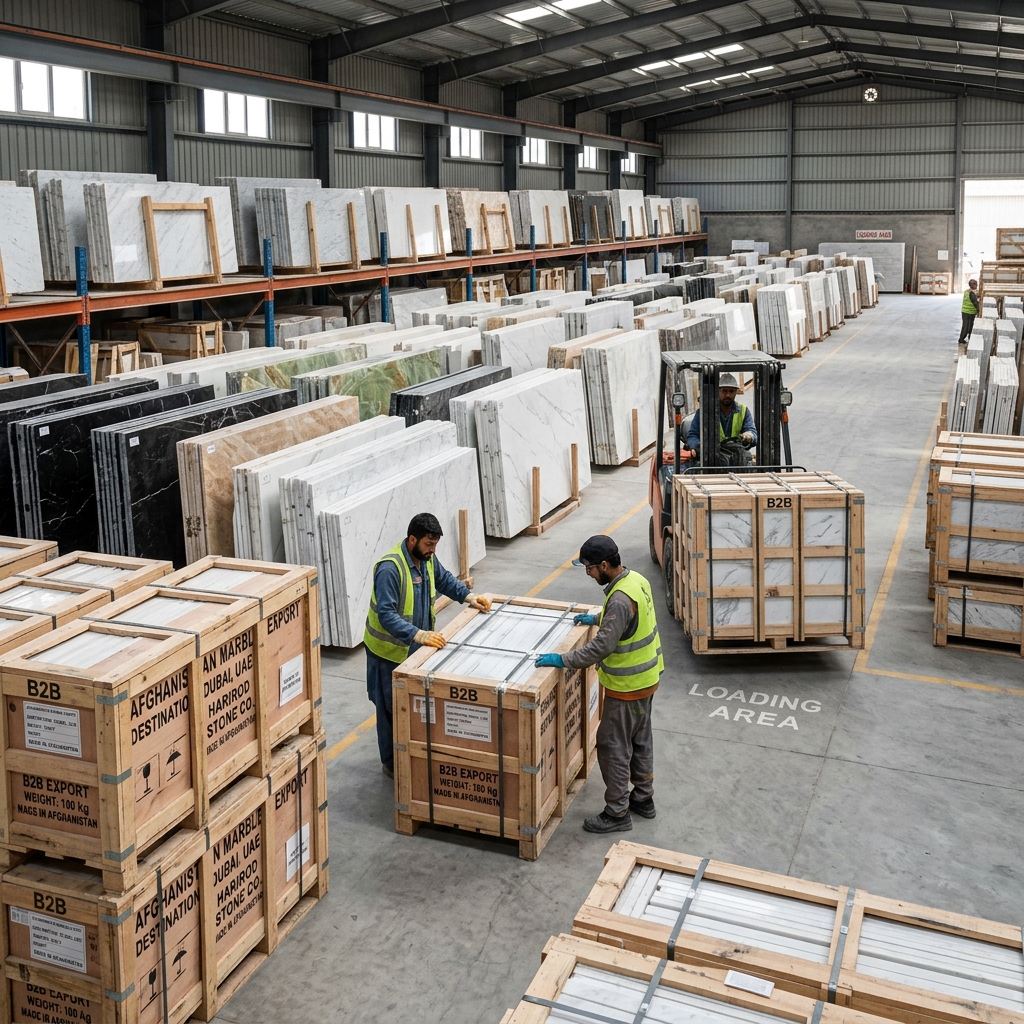
- Afghanistan exports both raw quarry blocks (to India and China for processing) and semi-finished/finished slabs
- India is consistently the largest single import destination for Afghanistan marble — driven by the Rajasthan and Gujarat stone processing industries
5. Major Export Destinations for Afghanistan Marble
| Country | Primary Import Type | Use |
|---|---|---|
| India | Raw blocks, gangsaw slabs | Processing, re-export, domestic construction |
| UAE / Gulf States | Polished slabs and tiles | Luxury construction, hospitality interiors |
| China | Raw quarry blocks | Industrial processing and re-export |
| Pakistan | Mixed blocks and slabs | Domestic construction and regional trade |
| Italy / Europe | Premium Grade A slabs | High-end architectural specification projects |
6. The India-Afghanistan Marble Trade Relationship
India's relationship with Afghanistan marble is deep and long-standing. The Indian natural stone processing industry — concentrated in Rajasthan (Kishangarh, Makrana) and Gujarat — has been importing Afghan marble raw blocks for decades.
Indian stone processors import Afghan quarry blocks, cut them on gang saws, polish them to export quality, and then re-export finished products globally — particularly to the UAE, Europe, and North America. This processing-and-re-export model means that much of the "Afghan marble" reaching end consumers globally passes through Indian processing factories before final export.
"India's position as the world's largest marble processing nation makes it the natural gateway through which Afghanistan marble reaches global luxury markets."
7. Challenges Facing the Afghanistan Marble Industry
Despite enormous geological potential, several structural challenges have historically limited the Afghanistan marble industry's development:
- Infrastructure gaps: Limited road networks connecting remote mountain quarries to processing centers and export ports increase transportation costs significantly
- Limited domestic processing capacity: Most Afghan marble is still exported as raw blocks — with value-added processing (gangsaw cutting, polishing) happening in India or China rather than Afghanistan itself
- Geopolitical instability: Decades of conflict have disrupted quarry operations, trade finance, and international business confidence
- Artisanal quarrying methods: Many smaller Afghan quarries still use traditional blasting methods that damage stone quality — reducing yield of A-grade material versus modern wire saw extraction techniques
- International banking restrictions: Financial transaction complexity between Afghan businesses and international buyers adds friction to trade
8. The Future of Afghanistan Marble — Growing Opportunity
Despite the challenges, the trajectory for Afghanistan marble in global markets points decisively upward. Several factors are driving this growth:
- Rising global demand for natural stone: The worldwide construction boom — particularly in India, the Gulf, and Southeast Asia — is driving unprecedented demand for high-quality natural stone
- Quality recognition: International architects and stone specifiers are increasingly recognizing Afghanistan white marble and Afghan onyx as premium alternatives to Italian stones at competitive prices
- Improved logistics routes: Road and border crossing improvements between Afghanistan and Pakistan have reduced transportation time and cost for Afghan marble exports
- Digital B2B platforms: Afghan marble exporters are increasingly using professional websites and digital platforms to connect directly with international buyers — reducing dependence on opaque intermediary networks
- Investment in processing: New marble processing factories are being established in Herat city, enabling more value-added export of polished slabs rather than just raw blocks
9. Key Facts Summary — Afghanistan Marble Industry
- 🏔️ Primary quarrying provinces: Herat, Kandahar, Badakhshan, Helmand, Bamyan
- 🪨 Main stone types: White calcite marble (Herat White), translucent onyx, green marble, black & gold marble, grey limestone
- 🌍 Key export markets: India, UAE, China, Pakistan, Europe
- 📦 Main export form: Raw quarry blocks (largest volume) and polished gangsaw slabs
- 🚢 Primary export route: Via Karachi port (Pakistan) for sea freight
- 📅 Quarrying history: Over 1,000 years of documented stone use in regional architecture
- 💎 Competitive advantage: Price significantly below Italian, Turkish, or Chinese equivalents for equivalent quality
Source Afghanistan Marble Direct — Get a Quote
We are an established importer with direct quarry relationships across Herat and Afghanistan's key marble-producing regions. Contact us for bulk pricing, samples, and export documentation.